Physical Address
304 North Cardinal St.
Dorchester Center, MA 02124
Physical Address
304 North Cardinal St.
Dorchester Center, MA 02124

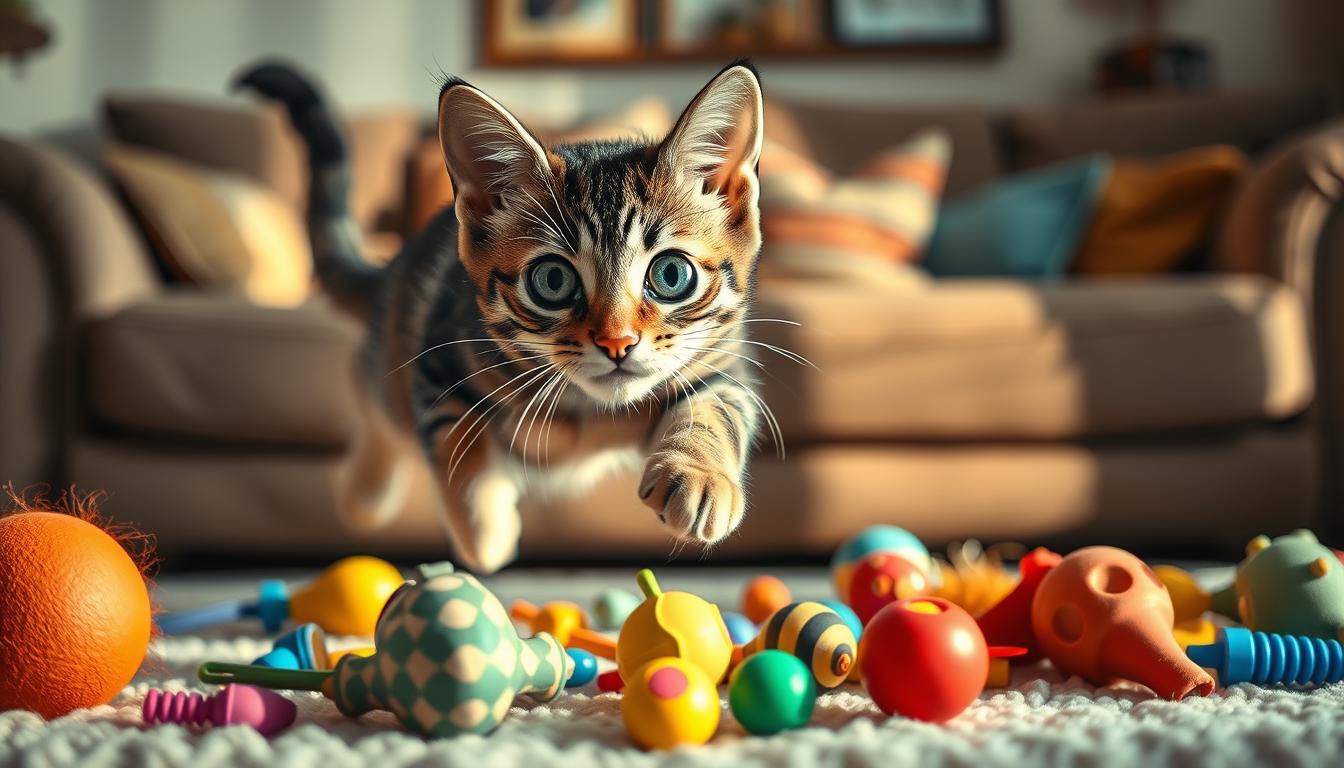
If you’ve ever owned a cat, you’ve probably seen them claim boxes as their own. This might seem funny at first. But it shows some interesting things about how cats behave.
Cats like boxes because they feel safe and cozy. In the wild, small spots can hide from predators or sneak up on prey. Your astonishing kitty might be using this instinct when they hide in a box.
Knowing why your cat loves boxes can make their life better. You can use boxes to make their environment more interesting or for training.
By accepting your cat’s box love, you can make their life better. This makes your remarkable pet even happier.
Cats can seem to defy gravity with their amazing agility. They are incredibly flexible and have a righting reflex. This lets them land on their feet, even when dropped upside down. Their anatomy and physiology make this possible.
Cats have a special righting reflex. It lets them rotate in mid-air to land on their feet. Their flexible spine, no collarbone, and unique inner ear help with balance and orientation.
Cats are great at judging jumps and landings. Their strong leg muscles and precise brain help. They use their eyes, whiskers, and inner ear to judge distances and adjust for a safe landing.
Whiskers are key for a cat’s spatial awareness. They detect small changes in air pressure and temperature. This helps your cat navigate tight spaces and judge opening widths.
| Physical Attribute | Function | Benefit to Cat Agility |
|---|---|---|
| Flexible Spine | Allows for twisting and bending | Enables cats to make sharp turns and quick changes in direction |
| Whiskers | Sensory organs detecting spatial changes | Helps cats judge the width of openings and navigate through tight spaces |
| Inner Ear Structure | Provides balance and orientation | Essential for the righting reflex, allowing cats to land on their feet |
Learning about the physics of cat agility can make you appreciate these remarkable pets more. By understanding their physical and neurological abilities, you can support their natural behaviors. This helps create an environment that encourages their agility.