Physical Address
304 North Cardinal St.
Dorchester Center, MA 02124
Physical Address
304 North Cardinal St.
Dorchester Center, MA 02124

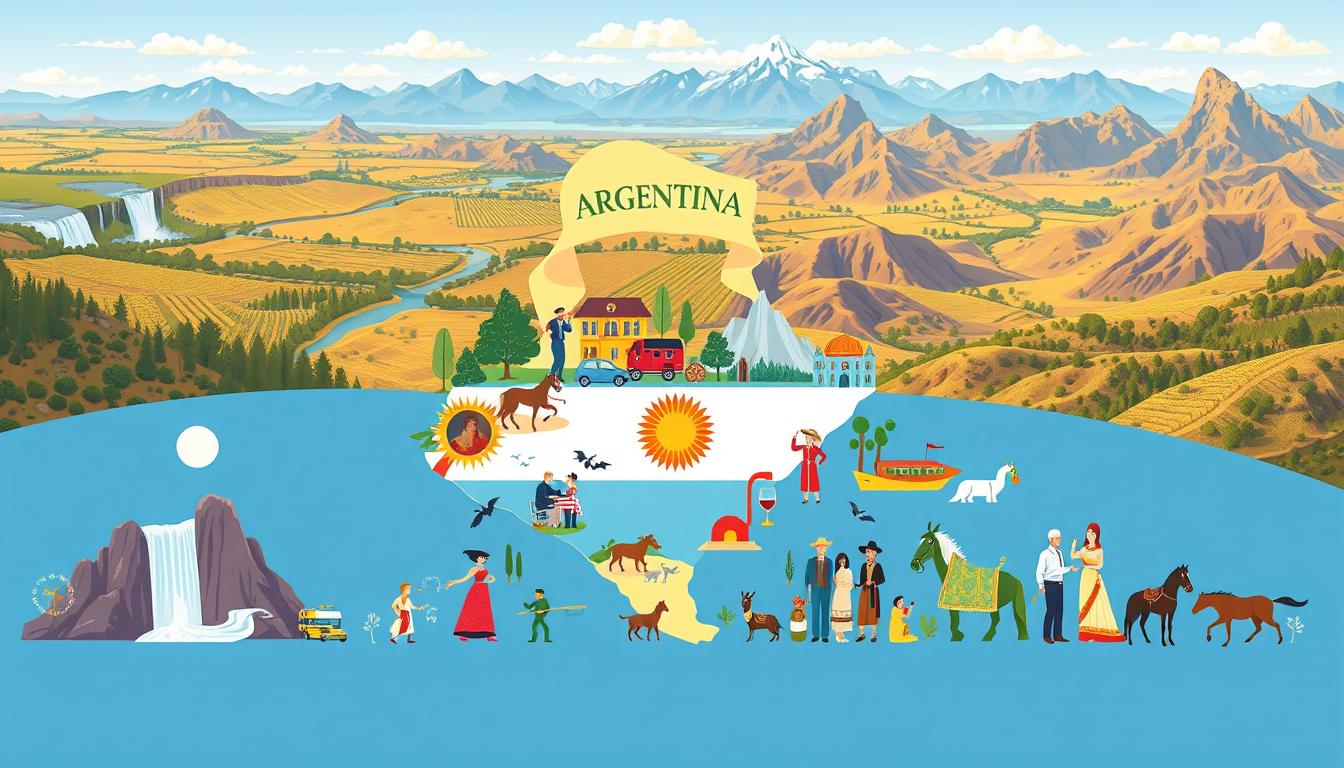
Exploring Argentina reveals a rich cultural heritage. You’ll see passionate tango dance, literary masterpieces, and lively neighborhoods. This heritage is shaped by European immigration, indigenous influences, and the country’s complex history.
Tango is more than a dance in Argentina; it’s a way to express passion and emotion. It was born in Buenos Aires’ streets and has become a global phenomenon. You can feel the intensity of tango by visiting tango clubs or watching a live performance in Buenos Aires.

Argentina boasts a rich literary heritage, thanks to Jorge Luis Borges. Borges’ innovative storytelling and philosophical themes have influenced literature worldwide. His legacy inspires writers and readers, making Argentina a cultural hub for literature.
La Boca is Buenos Aires’ iconic neighborhood. It’s known for its brightly colored houses, lively street art, and passionate tango performances. This vibrant area is a must-see for anyone wanting to experience Argentina’s spirit.
The colorful houses in La Boca were painted with leftover ship paint by Italian immigrants. This added color to the neighborhood and symbolized the community’s creativity and resilience. Today, La Boca’s colorful streets show the neighborhood’s rich history and cultural identity.
Exploring Argentina’s history reveals a rich tapestry of events. These events have shaped not just the country but the world. Argentina has played a key role in many historical milestones, making it a treasure trove of unique trivia.
In 2010, Argentina became the first Latin American country to allow same-sex marriage. This move was a big step for LGBTQ+ rights in the area. It showed Argentina’s dedication to equality and human rights.
The National University of Córdoba was founded in 1613. It’s one of the oldest universities in South America. Its long history of excellence has made it a key part of Argentine education, enriching the country’s intellectual heritage.
María Eva Duarte de Perón, known as Evita, was a key figure in Argentine politics. Her work with the descamisados and her role as First Lady brought big changes in society and politics.
Evita’s legacy continues to shape Argentine politics and culture. Her fight for women’s suffrage and her iconic status have made her a lasting figure in Argentine history. She symbolizes the ongoing struggle for social justice.
| Historical Event | Year | Impact |
|---|---|---|
| Legalization of Same-Sex Marriage | 2010 | First in Latin America, advancing LGBTQ+ rights |
| Founding of National University of Córdoba | 1613 | Oldest university in South America, hub for academic excellence |
| Evita’s Rise to Prominence | 1940s-1950s | Significant social and political reforms, women’s suffrage |
These historical facts show Argentina’s progressive stance and rich cultural heritage. They make Argentina a country with a truly unique history.