Physical Address
304 North Cardinal St.
Dorchester Center, MA 02124
Physical Address
304 North Cardinal St.
Dorchester Center, MA 02124

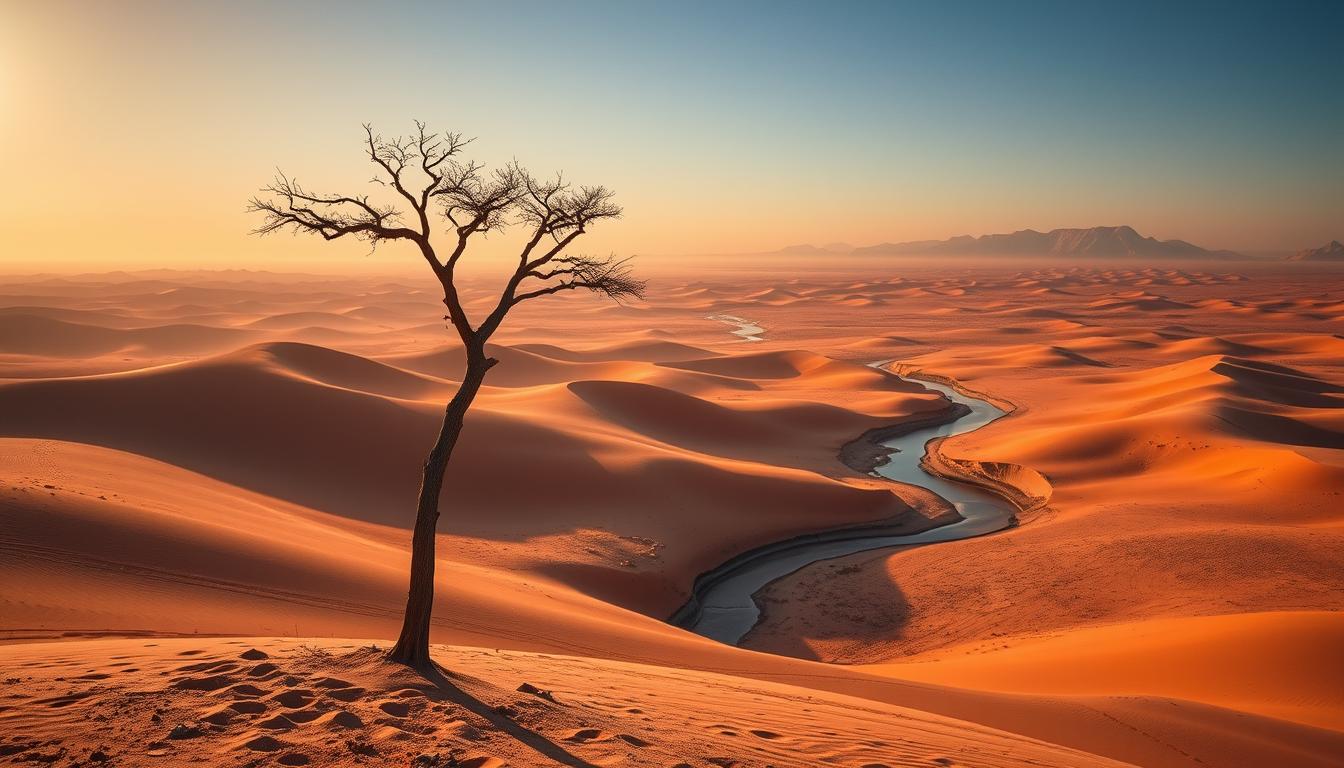
Exploring the Kalahari Desert reveals many interesting facts. It shows the desert’s historical importance and natural beauty. This vast area is full of surprises for those interested in history, geography, or nature.
The Kalahari Desert has a long history of human presence. Archaeologists have found evidence of ancient civilizations here. The San people, native to the area, have a rich culture that has lasted for generations.
The Makgadikgadi Pans are a standout feature of the Kalahari. This vast salt flat is a remnant of an old lake. It’s not just beautiful but also a home for many animals. The Kalahari is also home to fossilized river valleys and unique rock formations.
The Kalahari Desert is huge, covering over 900,000 square kilometers. It’s one of the biggest deserts globally and keeps growing. Its extreme climate and vastness make it a thrilling place for adventurers and explorers.
| Feature | Description | Significance |
|---|---|---|
| Makgadikgadi Pans | Vast salt flat, remnant of an ancient lake | Unique geological formation, habitat for wildlife |
| Fossilized River Valleys | Ancient riverbeds now fossilized | Provides insight into the region’s geological history |
| Vast Expanse of Sand | Covering over 900,000 square kilometers | One of the largest deserts in the world, stil expanding |
The Kalahari Desert’s climate is a delicate balance between its ecosystem and weather. It spans southern Africa, showing a mix of climates. Yet, it’s mainly known for being very dry and having extreme temperatures.
The Kalahari has a clear wet and dry season. The wet season is from November to March, when most rain falls. This leads to temporary water and green plants. The dry season, from April to October, is very dry with little rain.
Life in the Kalahari has learned to handle its harsh climate. Plants and animals have special ways to survive the heat and lack of water.
The Kalahari’s temperatures can be extreme. Daytime temperatures soar over 40°C (104°F) in summer. Nights can drop below 0°C (32°F) in winter.
Plants and animals here have amazing ways to save water. Some plants dig deep to find groundwater. Others store water in their stems or leaves.
Learning about these adaptations shows the Kalahari’s life is incredibly resilient. Exploring this unique place, you’ll see how its climate affects its ecosystem and visitors.