Physical Address
304 North Cardinal St.
Dorchester Center, MA 02124
Physical Address
304 North Cardinal St.
Dorchester Center, MA 02124

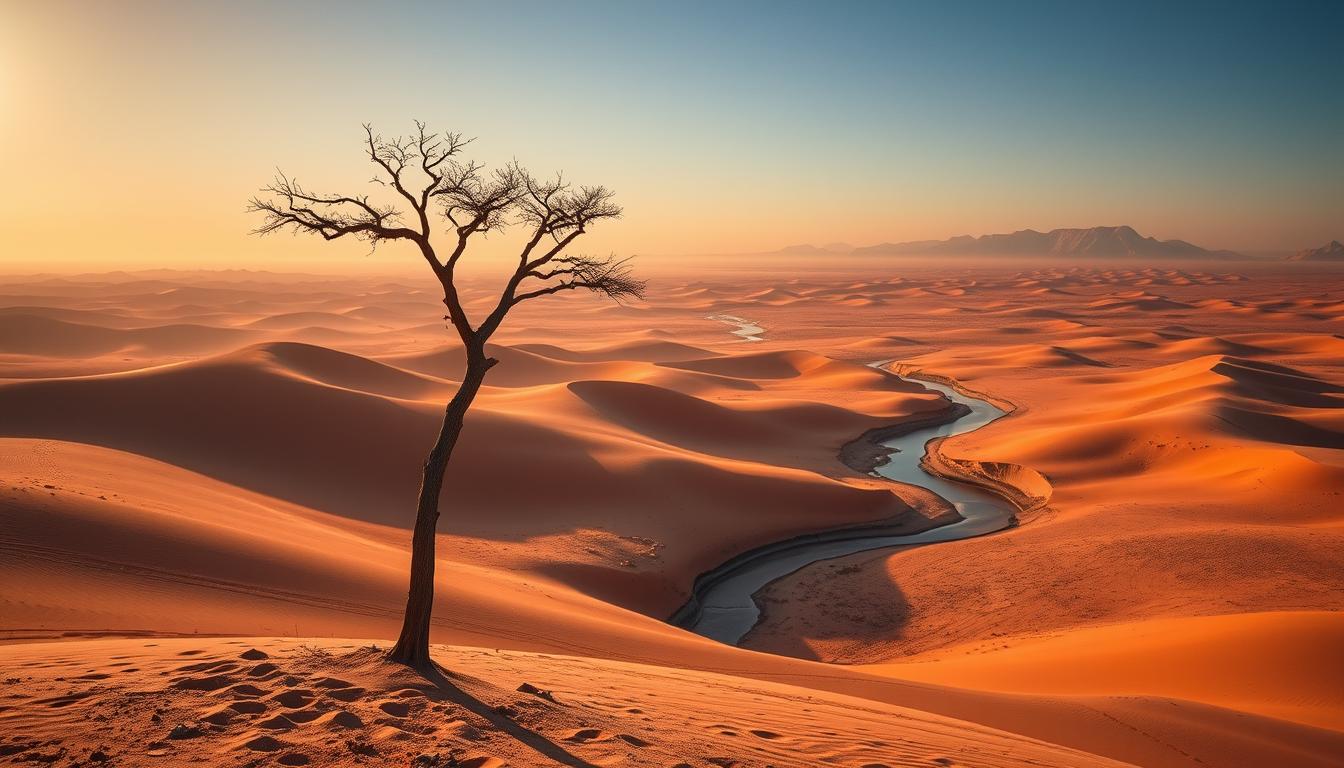
Going on a safari in the Kalahari Desert is an experience you won’t forget. You’ll see amazing mammals, birds, and reptiles up close. The Kalahari’s varied landscapes and climate support a rich ecosystem.
The Kalahari is famous for its majestic lions. These Kalahari lions are a must-see on any safari. They have powerful bodies and regal manes.
The Kalahari lion is well-suited to the desert’s harsh conditions. They have a strong coat and are fierce hunters. Seeing them in the wild is thrilling.
Antelope like the oryx and springbok are common in the Kalahari. They have special adaptations to survive in the dry environment. Their ability to go without water for long periods shows their resilience.
Meerkats are iconic in the Kalahari, known for their social behavior and upright stance. Other small mammals, like bats and rodents, also thrive here.
The Kalahari is a paradise for birdwatchers, with many raptors and bird species. Reptiles, including snakes and lizards, are also plentiful. They have evolved unique adaptations to survive the desert.
Raptors like eagles, hawks, and vultures are often seen in the Kalahari. They soar overhead, scanning for prey. These birds are vital to the desert ecosystem.
Reptiles in the Kalahari have developed amazing adaptations. They have camouflage and specialized scales to deal with the extreme temperatures and lack of water.
For the best wildlife viewing, visit the Kalahari’s national parks and reserves. Places like the Kgalagadi Transfrontier Park offer guided safaris. They provide the best conditions for seeing the desert’s incredible wildlife.
The Kalahari Desert shows how life can thrive in tough conditions. It has a wide variety of plants, from tall trees to small grasses and shrubs.
Drought-resistant plants are a key feature of the Kalahari. These plants can survive with very little water.
The camelthorn tree is a symbol of the Kalahari. It offers shade and food for animals, helping the desert ecosystem.
The Kalahari also has many grasses and shrubs. These plants have deep roots to find water deep underground, helping them survive the dry conditions.
The Kalahari changes a lot with the seasons. Plants grow a lot when it rains.
After rain, the desert blooms with color. These short but beautiful displays are a highlight of the Kalahari’s year.
Plants in the Kalahari have special ways to survive. They have deep roots, small leaves, and can sleep during very dry times.
Exploring the Kalahari, you’ll see its amazing plant life. The unique plants show how nature can adapt and survive in harsh places.