Physical Address
304 North Cardinal St.
Dorchester Center, MA 02124
Physical Address
304 North Cardinal St.
Dorchester Center, MA 02124

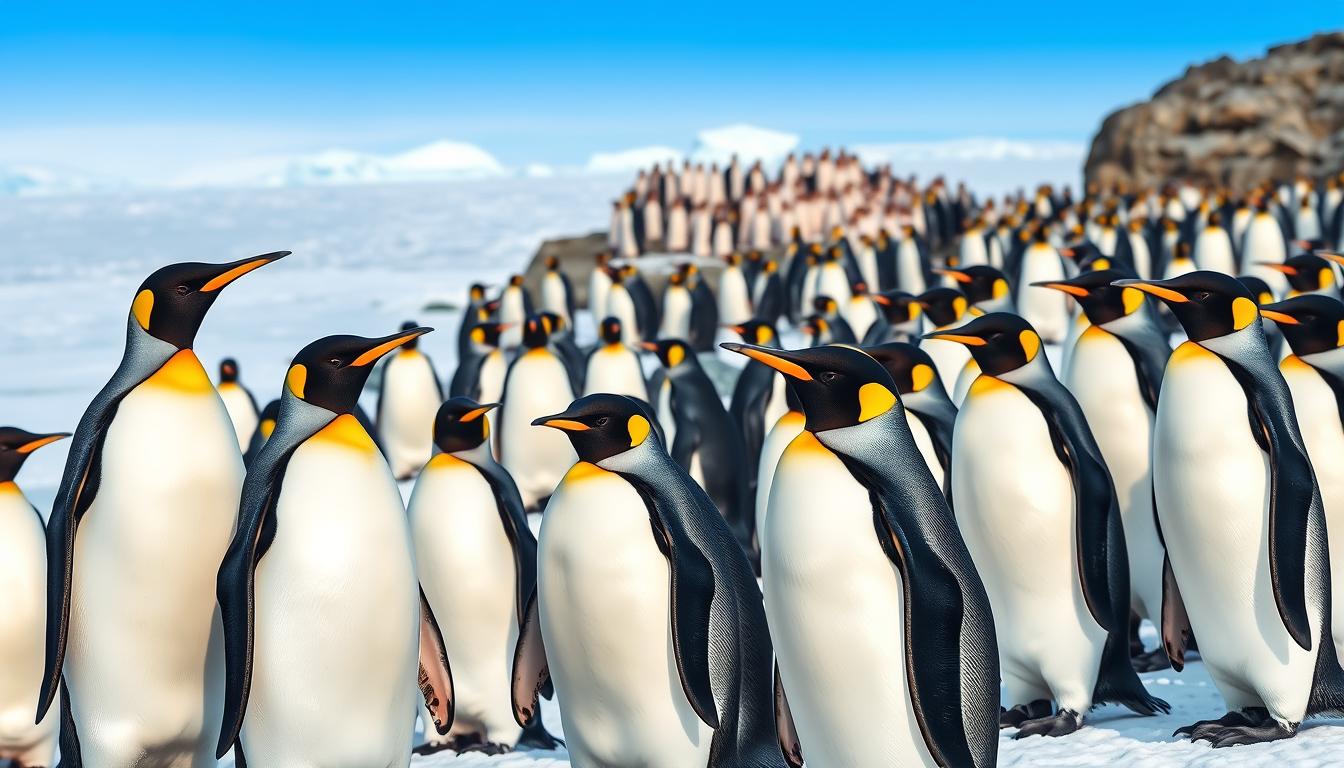
Exploring the different types of penguins is a thrilling journey. These birds are grouped based on their looks, behaviors, and genetics. This helps scientists sort them into various species and families.
Scientists look at morphological characteristics like feathers, beak shape, and size. They also study behavioral patterns like mating and feeding habits. Genetic analysis helps identify species and their evolutionary ties.
There are 18 recognized penguin species, divided into six genera. The table below shows how they are classified:
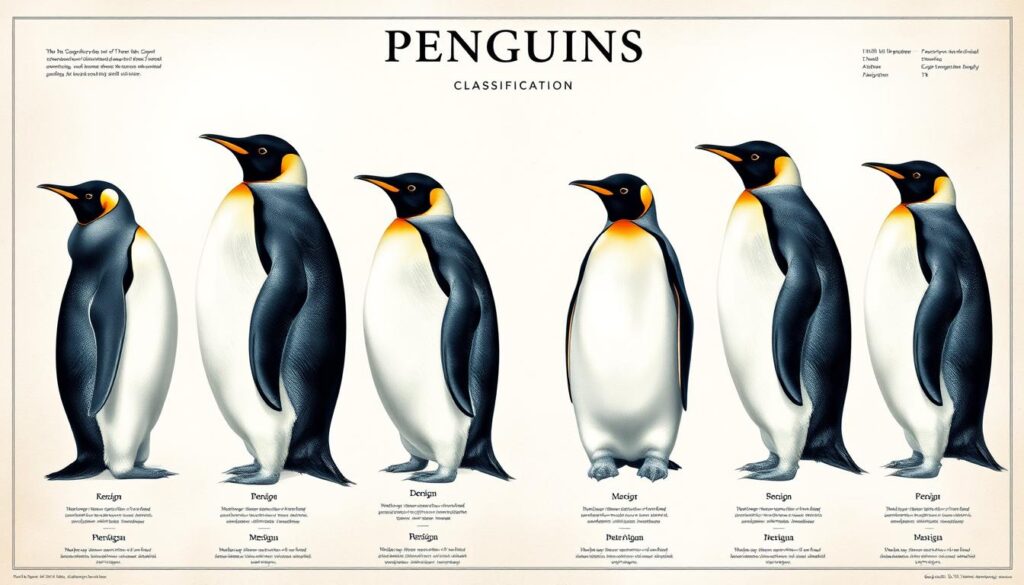
| Genus | Common Name | Scientific Name |
|---|---|---|
| Aptenodytes | Emperor Penguin | Aptenodytes forsteri |
| Aptenodytes | King Penguin | Aptenodytes patagonicus |
| Pygoscelis | Adélie Penguin | Pygoscelis adeliae |
| Pygoscelis | Gentoo Penguin | Pygoscelis papua |
This system shows the diversity in penguins. It also highlights each species’ unique traits.
Emperor penguins can grow up to four feet tall. They are the largest penguin species and very interesting. Their size and unique traits make them stand out.
Emperor penguins have yellow patches on their chest. These patches stand out against their black and white feathers. Their large size and striking color make them a favorite among wildlife fans.
They have a streamlined body. This helps them swim well in the cold Antarctic waters.
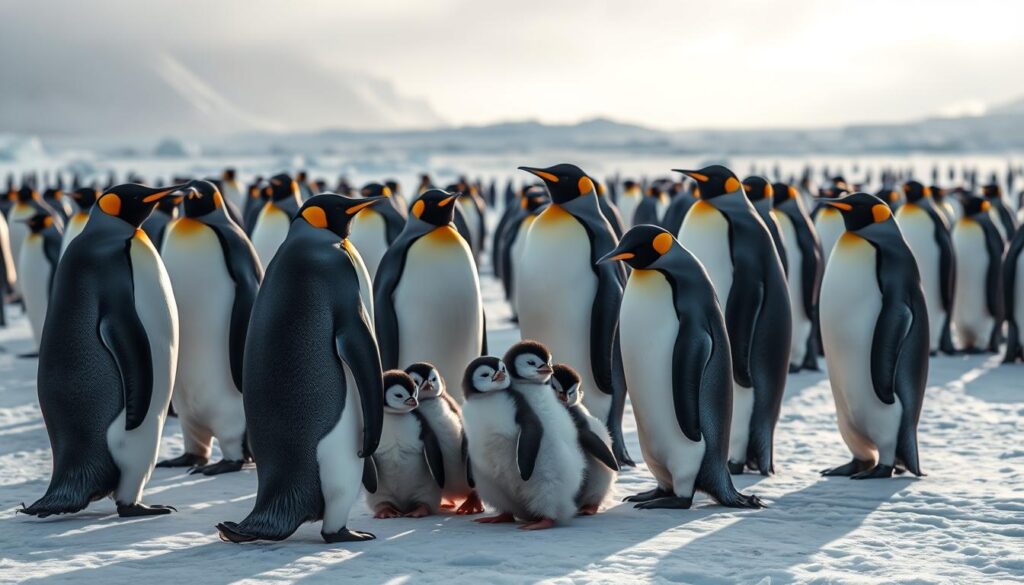
Emperor penguins live in Antarctica. They breed in large groups on the ice shelves. They are well adapted to the cold, with thick fat and feathers to stay warm.
Their home is very cold and windy. But they have learned to survive in these conditions.
Emperor penguins breed in the Antarctic winter. Males incubate eggs on their feet while females hunt for food. This unique behavior helps them survive the harsh winter and raise their chicks.
Emperor penguins can dive up to 1,800 feet deep. They can stay underwater for up to 20 minutes. They are very social, living in large groups and communicating with each other.
Key characteristics of Emperor penguins include: