Physical Address
304 North Cardinal St.
Dorchester Center, MA 02124
Physical Address
304 North Cardinal St.
Dorchester Center, MA 02124

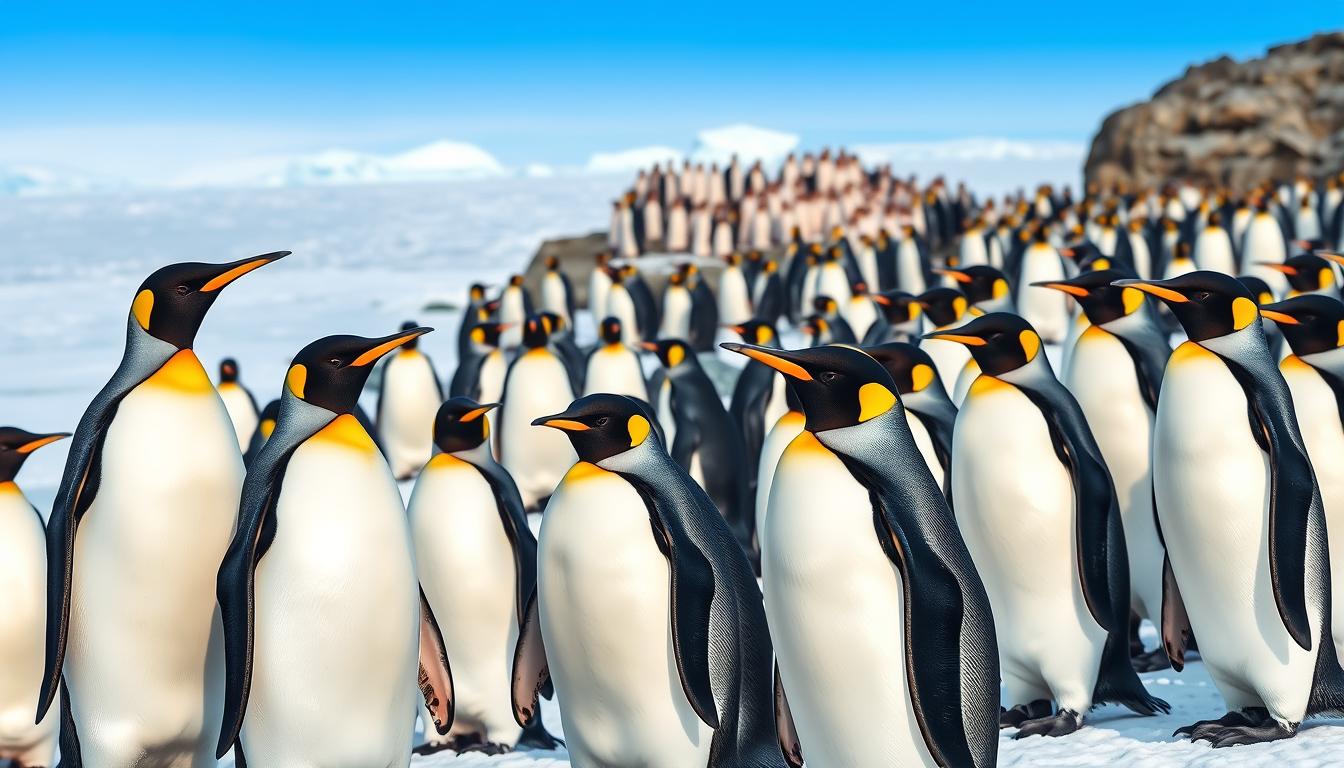
Did you know the Little Blue Penguin is the smallest penguin in the world? These tiny birds live in the coastal waters of Australia and New Zealand. They have special traits that make them stand out from other penguins.
Little Blue Penguins are the smallest penguins, growing to about 12 inches tall. They weigh between 2.2 and 3.5 pounds. Their blue-gray backs and white bellies help them hide from predators in the sea and sky.
These small penguins call the coasts of Australia and New Zealand home. They live on islands, bays, and coastal areas. They nest in burrows, caves, or under plants, enjoying climates from subtropical to temperate.
Little Blue Penguins are known for their special behaviors. They can swim well, using their wings like flippers. They also have unique calls and can move through dense vegetation.
Little Blue Penguins are interesting creatures. They are monogamous, with many pairs staying together for years. They are also very social, often living in big groups.
| Characteristic | Description |
|---|---|
| Height | About 12 inches (30 cm) |
| Weight | 2.2 to 3.5 pounds (1-1.6 kg) |
| Plumage | Blue-gray back, white belly |
| Nesting | Burrows, caves, under vegetation |
When you see penguins in the wild, knowing how to tell them apart can make it more fun. Each penguin has its own special look, like markings, beak shapes, and feather patterns. These features help them fit in with their surroundings, making them interesting to watch and learn about.
To spot penguins, look for these important signs:
By noticing these details, you can better figure out which penguin you’re seeing.
Penguins live in different places around the world. Here are some top spots to see them:
Going to these places lets you see many penguin types in their natural homes.
Many penguin species are at risk of extinction. It’s vital to know the threats they face and the conservation work being done. Penguins, with their unique diversity, are facing severe challenges that threaten their survival.
Penguin populations are under threat from climate change. Rising temperatures are melting sea ice, which is essential for them. Overfishing also harms penguins by reducing their food supply. Pollution and coastal development are destroying their habitats.
Efforts are being made to save penguin populations and their homes. Organizations are creating protected areas and monitoring penguin numbers. They also educate people about the need to protect penguins.
You can help by supporting conservation groups, reducing your carbon footprint, and sharing information about penguins. Every small action can help a lot. Together, we can make a big difference.
Exploring the different penguin types shows us how unique each species is. From the huge Emperor Penguins to the tiny Little Blue Penguins, their variety is amazing.
It’s important to understand and appreciate these birds for their survival. Knowing about penguins and their homes helps us protect them. This knowledge supports efforts to save these amazing creatures for the future.
You can help by supporting groups that work to save penguins. Also, sharing the need to protect their homes is key. Every little bit helps, and together, we can protect these incredible birds for a long time.